
The Blues Jam Handbook: Understanding The Language Of A Blues Jam
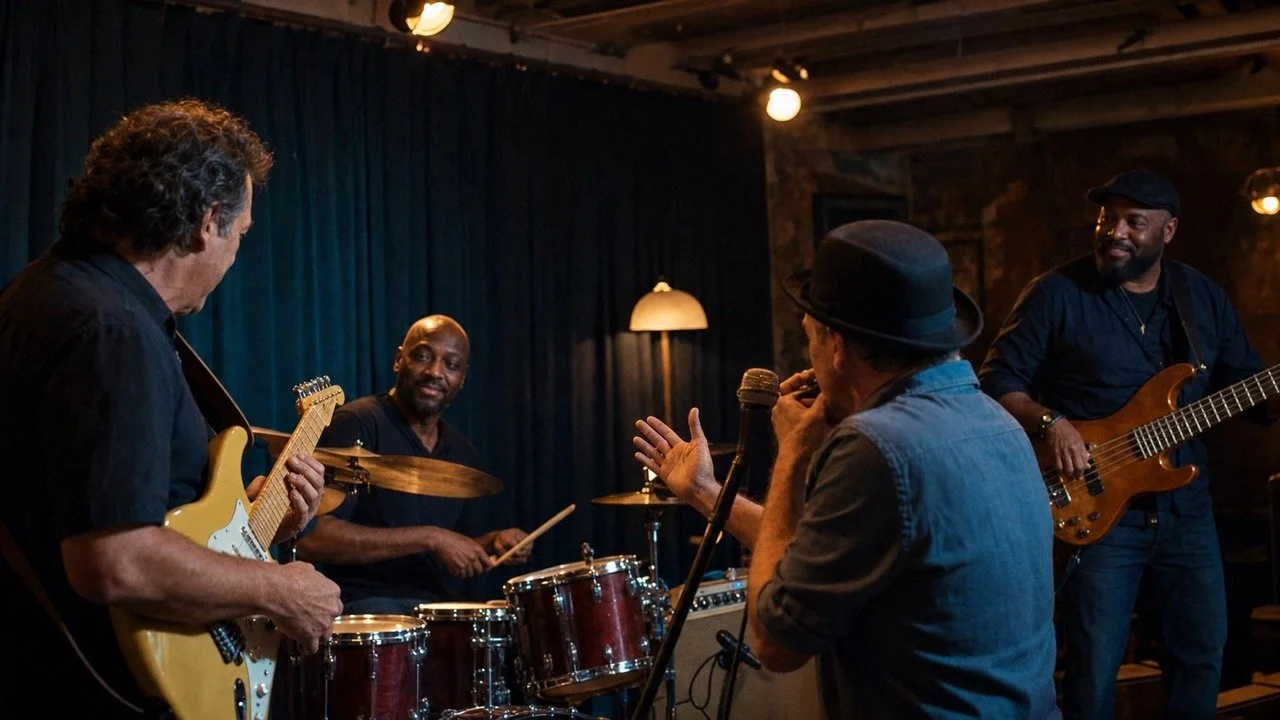
“Watch me for the stops.”
That is the sort of thing you hear at a blues jam about three seconds before the song starts, usually while somebody is still plugging in and the drummer is adjusting a cymbal. Everyone nods as if the entire arrangement has now been explained. Sometimes it has. Sometimes it absolutely has not.
The Blues Jam Handbook is a practical guide to the short phrases, grooves, cues and song references musicians use at blues jams. It is not a rule book. Blues jams do not work like that. It is more of a translation guide for the bandstand, where “Texas shuffle”, “come in on the five”, “quick change” or “think Chain of Fools” can save a lot of talking, provided everyone has a rough idea what is being asked.
The aim is simple: help musicians play better together, faster.
Why Blues Jams Need Their Own Language
A blues jam is not quite a gig, not quite a rehearsal and not quite a lesson. It is a group of musicians trying to make something feel good with very little discussion.
That means the language has to be quick.
Someone might call a key, a groove, a feel, a well-known song reference, a stop, a push, or an ending cue. Nobody wants a committee meeting before a twelve-bar blues. They want enough information to start the song, then enough listening to keep it alive.
This is where things can get messy. Different players use the same phrase slightly differently. One drummer’s “shuffle” is another drummer’s “swing”. One guitarist’s “Chicago” is another guitarist’s “please stop playing so many notes”. The terms are useful, but they are not carved into stone.
So each chapter in this handbook takes one common blues jam reference and explains what it usually means in real playing situations.
Start With The Groove
Most jam problems are not caused by a lack of clever notes. They are caused by the band not agreeing on the feel.
If someone calls What Is a Texas Shuffle?, they are usually asking for a driving shuffle groove with swing, weight and forward motion. Visceral, authoritative and almost impossible to sit still to, when it is played properly.
If someone says What Do Musicians Mean By Chicago Blues?, they are usually pointing towards amplified band blues: guitar, harp, piano or second guitar, bass and drums working as one tough little machine.
Those are not just style labels. They tell the band how to sit, how much space to leave, how hard to hit, and what sort of vocabulary will probably fit.
Get the groove wrong and your best solo may still sound like it arrived at the wrong party.
The Blues Jam Handbook
Basic 12 Bar
The Cues Matter
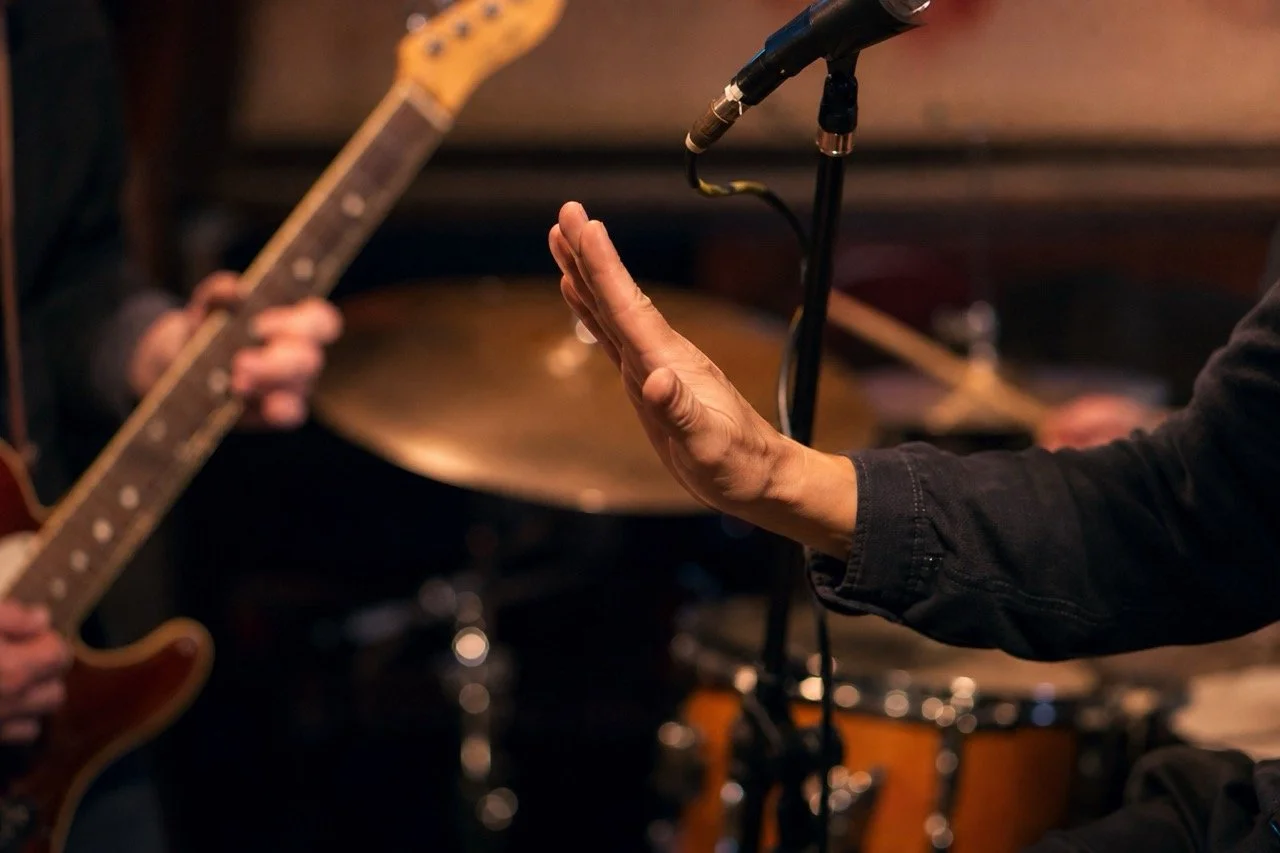
Blues jams also run on small cues.
“Quick change.”
“Come in on the five.”
“Watch me for the ending.”
“Push the last chorus.”
These phrases are not there to make anyone feel clever. They are survival tools. They tell the band where the song is going before the wheels come off.
The trick is not just knowing the words. The trick is watching, listening and leaving enough space to react. A good jam player does not need everything explained. They notice the singer’s hand, the drummer’s lift, the bass player’s movement, the way the soloist starts shaping the final chorus.
That is musicianship. Quiet, useful, and often more valuable than another lick in the 12th fret area.
Song References Are Shortcuts
Blues players also use song references as shorthand.
“Think The Thrill Is Gone.”
“More Chain of Fools.”
“Pride and Joy feel.”
“Stormy Monday changes.”
These do not always mean “play the exact record”. Usually they mean, “Use this recording as the map.” The feel, tempo, groove, arrangement shape or harmonic movement is being borrowed because everyone can recognise it quickly.
That can be very helpful. It can also be dangerous if only one person knows the reference and everyone else smiles bravely.
The goal of this handbook is to make those references less mysterious, so a player can hear the instruction and make a useful musical choice straight away.
How To Use This Handbook
Read one chapter at a time.
Do not try to memorise the whole thing like a theory exam. Take one idea to the next jam and listen for it. If the chapter is about shuffle feel, pay attention to the drummer. If it is about endings, watch the singer. If it is about a song reference, listen to the record and ask what the band is borrowing from it.
The handbook will grow as the series develops. Early chapters focus on common jam language and grooves. Later chapters will cover song references that appear again and again at blues jams.
The point is not to make everyone play the same way. The point is to give the band a shared vocabulary, so the music can start quicker and breathe better.
Chapters - In Progress
The first chapters are live now. The remaining chapter links are included as placeholders and will become active as each article is written and published.
What Do Musicians Mean By Chicago Blues?
What Is a Quick Change in Blues? (see Different Types of 12-Bar Progressions)
What Does “Come In on the Five” Mean?
What Does “Watch Me for the Ending” Mean?
What Does “Think Chain of Fools” Mean?
What Does “The Thrill Is Gone Feel” Mean?
Why Pride and Joy Is a Useful Jam Reference
Why Every Blues Jammer Should Know Hide Away
Why Sweet Home Chicago Keeps Appearing at Jams
What Stormy Monday Tells a Band
Why Key to the Highway Is Worth Learning
What the Blues Brothers Soundtrack Teaches Jammers
What Do Hand Signals Mean At A Blues Jam?
JW Pro Tip
At your next jam, listen for the instruction before the count-in.
The key matters, but the feel matters more. If you know the key but miss the groove, you are already behind.
